
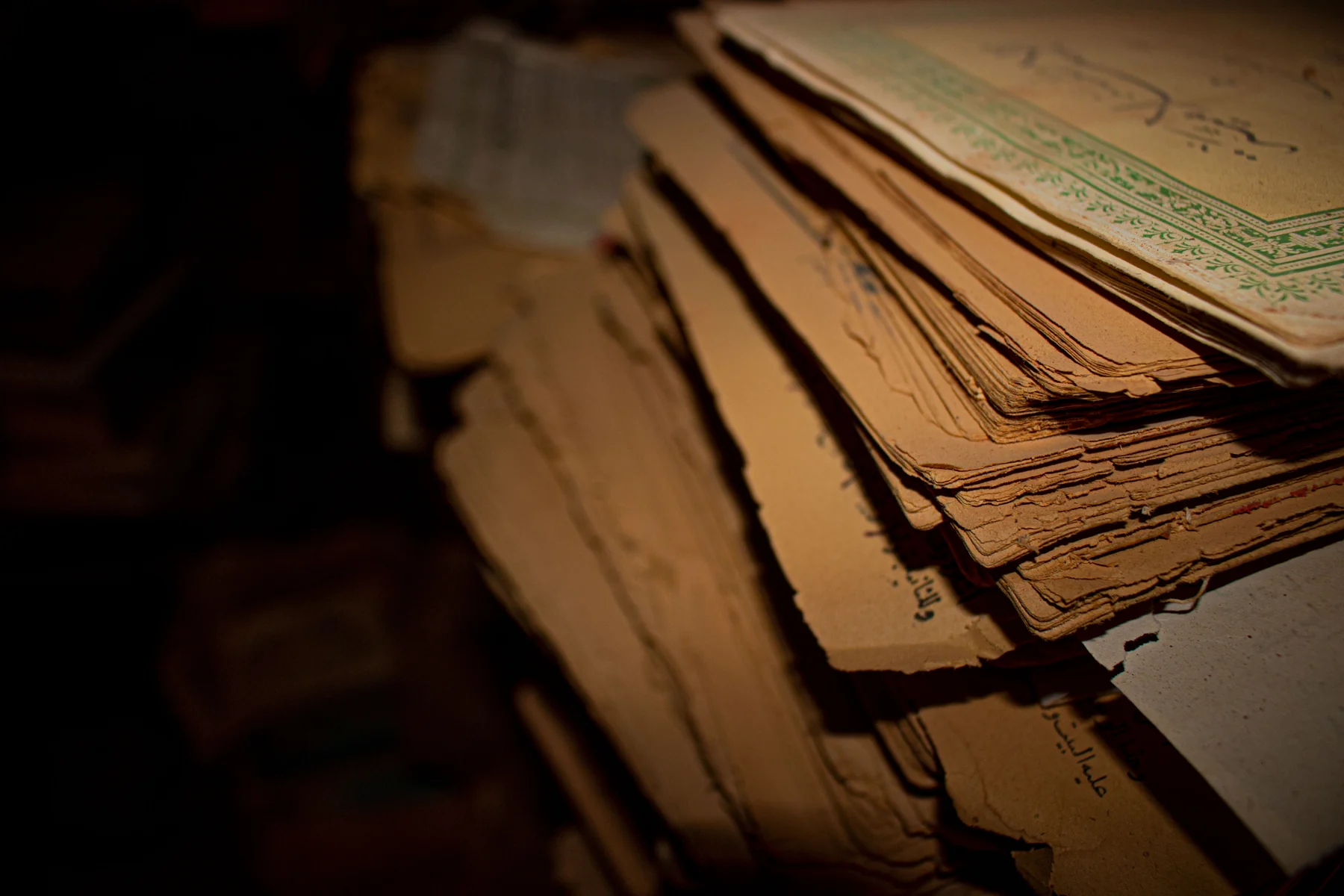
With an old manuscript, it's easy to count centuries. I'm more interested in who opens the locker tomorrow. In the famous libraries of Chinguetti, the care of books is linked to families. The transfer of the collection involves a task, while the next generation may have a completely different plan with its life.
In order to maintain the libraries of the city of Mauritania, we therefore need a roof, adequate storage, professional assistance and people who can afford this job in their lives. If you come as a visitor, you can learn from these families and collections. It is worth discussing in advance which library receives the language they can speak and what they can show him.
The books were traveling.
Chinguetti is located in the northern part of Mauritania, in the Adriatic area. His town, together with the historical settlements of Ouadane, Tichitt and Oualata, has been on the UNESCO World Heritage List since 1996. The four cities were an important centre of trade across the Sahara and Islamic science. The world heritage site includes buildings, streets and settlement structure; the title is not a separate classification of each family manuscript.
The history of the libraries will be misled if we only imagine a secluded desert sanctuary. There were merchants, pilgrims and scientists on the caravan roads. They wrote, copied, carried, sold and bought. Knowledge had its way, and the accumulation of documents was linked to these relationships.
The UNESCO list includes, in addition to religious texts, commercial documents, mathematical works and poetry. It helps me imagine why such a collection is important. An old document, beyond scientific interest, could have been linked to a case of local life. Seeing him behind glass today doesn't necessarily make him an object of honor.
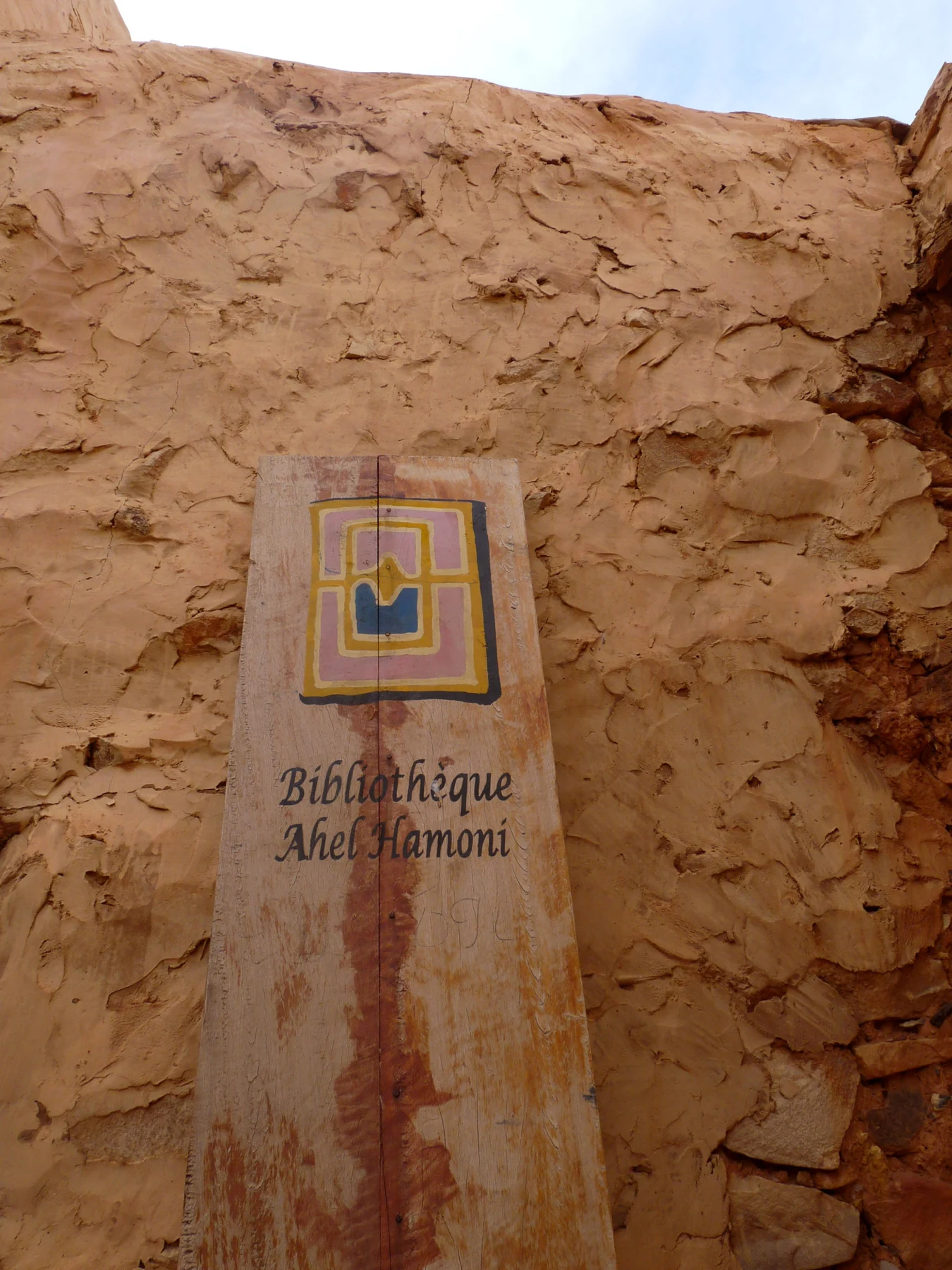

In the door of a family library
The historical sites of the collections were family houses. The professional study on their restoration also presents the Habott, Hamoni and Wanane libraries: separate places, special family heirlooms. There are therefore several doors behind the term "the library" (Chinguetti).
This is a different situation as visitors than when we're in line at the cashier's office of a large museum. The presentation we can get depends on who we can find, how long he has, and how we can talk to him. The most beautiful manuscript in the world doesn't help much if we don't understand anything your caretaker tells us about it.
The author of a travel report in 2024, Hamish, found the libraries interesting, but he described the presentation as hasty and only French to follow. It's his experience, not every visit schedule. However, it is a good warning that there is still little programming in itself. I would also like to know what time it is in there: will you show us some cards, or can we understand something from the story of a particular book?
Looking after the roof matters too
It's easy to think about the fragile pages of preservation. There's a roof above them. The Terrachidia organisation has installed library buildings with local materials and masters in its work completed in January 2020. Stone walls, paving, wooden roofs and drainage have been repaired.
In addition to the word "desert," the drainage may have a strange effect. However, UNESCO mentions heat and insects, together with sudden flooding, among the factors which threaten documents. The dry landscape does not mean that water can be left out of planning.
The restorer's study includes cracked roof insulation, damaged beam and inlet. This part of the job is less spectacular than an open manuscript, but it's essential. Even if you get a good storage box in the book, if you don't protect it properly during the building.
Therefore, the state of the collection and the state of the house belong together. Roofing is not an archaeological setting: it keeps a place in use where books can be dealt with. The maintenance of walls, drainage and wood remains a regular task even after recovery.
Besides families, professionals also work
The picture of the lonely bookkeeper is strong. It just doesn't fit everything that happened in Chinguetti around the manuscript.
In November 2020, IFLA launched a technical presentation presenting the work of the Chinguetti Manuscript Processing and Staff Protection Laboratory. The rapporteur was the head of the laboratory, Al-Mustafa Muhammad Salih. The programme named a local professional institution and local knowledge. It is important to miss the stories in which only one old man and the approaching sand remain.
UNESCO launched a new defence programme in 2024. The on-the-spot needs assessment included families and Mauritanian institutions that manage libraries. They discussed means of storage, training and the importance of libraries. The launch of the programme does not prove that all the tasks have been solved since then; however, it is true that conservation is a common cause for several actors.
There's an older, very tangible example. The 2006-2008 project of Terre Solidali and its partners published an Arabic and French catalogue of Ahel Habott's collection and created a children's library in Chinguetti. The project's accounts record this as an early result, not as evidence of its operation today.
The catalogue and the children's library answer two separate questions. One of them might tell us what kind of art is on the shelves. The other can give space for the book to be a useful thing for a child living locally. A visitor turns around in a few hours; the local reader may have a different connection to the same place.
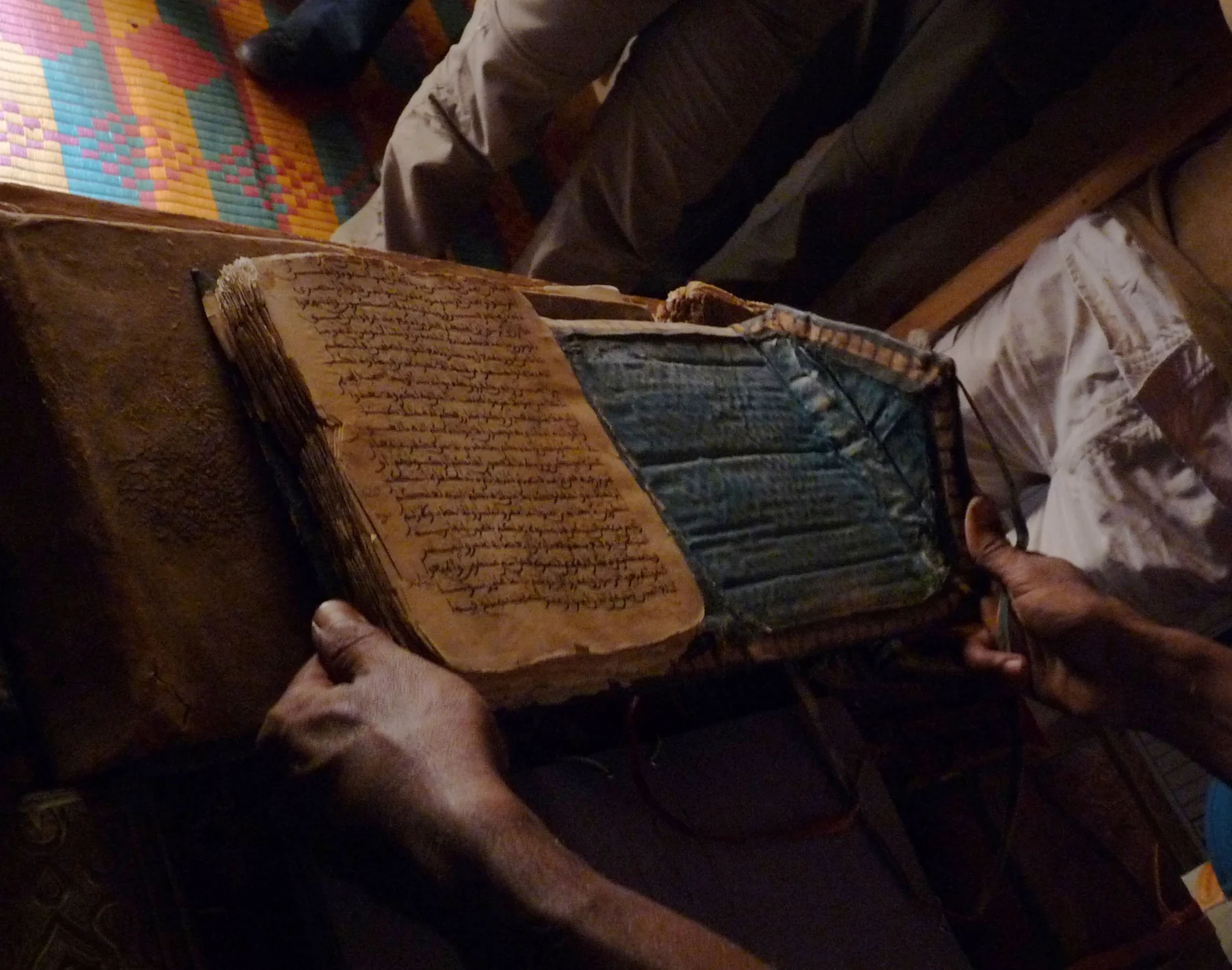

An heir may have other plans
In his report in Kang-Chun Cheng The Dial, Mohammed Abdullah Ould Gholam Habott is a caretaker of the library that is inherited in his family. The author also writes that at the time of the report, two of his sons were not committed to taking over the task. It's an open question of a particular family. It doesn't prove that Chinguetti's young people have usually turned away from their own legacy.
That's the kind of openness that matters to me in this story. The importance of books does not dispute the right of the heir to seek, learn or live elsewhere. His commitment cannot be derived simply from his kinship. From the outside, it's easy to wish that everything stays in place. Doesn't tell us who's gonna do the job.
It wouldn't be fair for the boys to decide what they should choose. The question is, under which conditions this task can be undertaken. How long does it take? How do you make a living with him? Who helps if a file protection problem goes beyond family options? These are not answered by an enthusiastic sentence of inheritance.
I would measure the meaning of outside help. Will you give us a useful tool, knowledge, relationship or just another requirement for the caretaker's shoulder? Family bonding can mean a lot, but it's not worth counting on as if it means unlimited working hours and safe succession.
What do you have to agree before you go?
If you also travel to Mauritania because of Chinguetti's libraries, specify the collection planned for your visit with the local manager or the hostess. Ask if they'll bet on a given day, who will hold the presentation and what language. If interpretation is needed, it is also worth organising in advance. I wouldn't build on an opening or admission fee taken over from an old report.
Before taking a photo, ask the caregiver for permission and see if you can get a picture of the room, the people and the manuscript. Do not take the presented book automatically. Let the caretaker determine what and how to show you; don't consider using the flash as a default. These are visitors' recommendations, not the uniform rules for all libraries.
It's also worth asking for a photo signature. Which collection are we in? What is the title or theme of the work presented? Are you familiar with the age of the manuscript, or are we talking about the age of the author of the text in it? The two slip easily. Another copy can guard a much older piece.
I'd rather hear more about less books. Who collected it, what was it used for, how is it accounted for? If there's time left at the end of the show, I'd ask what they're working on in the library.
Sources and verification
Source verification: The dates of historical sources are listed separately below.
- UNESCO World Heritage Centre: Ancient Ksour of Ouadane, Chinguetti, Tichitt and Oualata - The common world heritage scene of the four cities, 1996 recording; historical trade and religious role.
- UNESCO: L - UNESCO lance un projet en Mauritanie pour soutenir les bibliothèques du désert - 27 April 2024; this page was updated on 21 October 2026. Endangering factors, family needs assessment and the subjects of the manuscript. Project launch is not proof of full implementation.
- Carmen Moreno Adán, Raquel Peña López and Oriol Domínguez Martínez: Restoration of the historical liquidity of Chinguetti, Mauritania - Journal of Traditional Building, Architecture and Urbanism, 2020, 222-234. Family collections, commercial contacts and documented structural damage.
- Terrachidia: Historical Library of Chinguetti - Project presentation of the construction organisation; works completed in January 2020, local materials and building repairs.
- IFLA: Manuscript Preparation in the Historic City of Chinguetti, Mauritania Webinar - a professional event on 9 November 2020; the local laboratory and its head. From the institutional data of our time, we do not set today's opening.
- Terre Solidali: Bibliothèques anciennes - The documented result of the 2006-2008 cooperation: Arabic / French catalogue and children's library. We haven't checked his current operation.
- Kang-Chun Cheng: Under an Ocean of Sand - The Dial - April 28th photo gallery; the page does not clearly include the year. Habott and two of his sons' positions are limited to the time of the report. The report is not Henrik's experience.
- Hamish: The Mauritanian Sketchbook - July 6, 2024 A traveler's library visit experience, not a general service test or current language guarantee.
Research cultural article with a source audit on 22 October 2026. Current weighing is new copyright; there is no Mauritanian field memory attributed to Henry. Visitors' council is not a single library policy. Opening hours, fees and access require current local consultation. The images are dated archive recordings of external authors.