
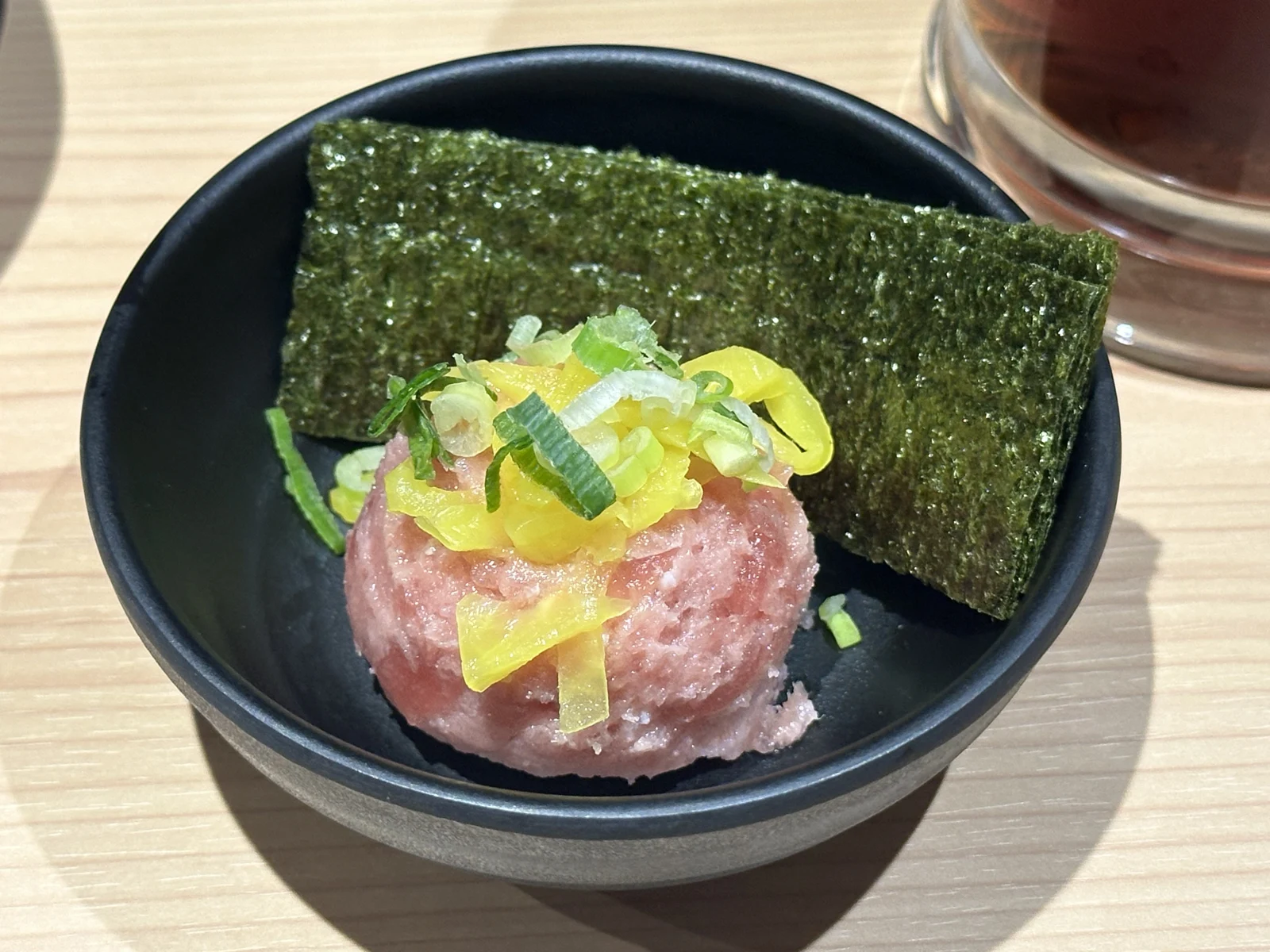
A small bowl of food will be on the table before you go through the menu properly. With the Hungarian head, it's easy to take it as a present for the house. In a Japanese izakayan, this could be the Totoshi: automatically served start-up course, to which a fee per person is charged. He'll be in the account. Just because you didn't choose it doesn't mean it's a wrong order.
The short answer you can use: consider the otoshi as a separate cost and ask for the amount before sitting or ordering. If you don't want to, then make sure you can leave or pick another place. Don't build on the fact that if you leave the plate intact, they'll definitely cancel the prize. The practice differs from place to place; it is not true that all Japanese restaurants and even all isakayas operate in the same way.
One dish, two roles
Izakaya is about the kind of restaurant where you can drink and eat small foods. The Otoshi in this medium is truly understandable: food, which also carries the seat fee. JNTO, Japan's official tourist organisation, explains the small appetizer that comes in automatically. It's not the name of a recipe. Edamame, pickled vegetables or potato salad can play this role.
So the plate itself can't tell what accounting is involved. The same small amount of salad can be ordered separately, part of a menu or otoshi. This requires an explanation of the menu and staff. The waiter's move with which to put it down unfortunately does not contain any inscription.
The remarkable thing for me is that food and price will be visible at a separate time to those who do not know the custom. The food is already there, the accounting isn't in your head yet. From here, there will be a completely unnecessary debate: one party brings a regular service and the other will receive a gift. You don't have to have bad intentions, you just need two different basic assumptions.
In addition to the name Otoshi, you can also meet the word Tsukidashi. Tokyo Restaurant Guide uses both for this start-up. As a traveler, recognition of the name is more useful than noting an uncertain origin story: the important thing is to notice the prize that belongs to it.
How much is it, and who pays?
There is no national otoshi price list among the sources of this article. In February 2026, the local tour guide Daichi Kikuzawa refers to 300-500 yen per person; Helen Foster's travel journalist describes other places and higher fees. These are information points, not the restaurant behind the next door. The specific amount must be found there.
Personal accounting can be more important than it looks at the first time. For example, if you get 500 yen per person in one place, for four adults this is 2000 yen, even before your ordered meals and drinks. It's just a math example. But you can see why it's not enough to remember that a couple of hundred yen: a whole table is already in the account.
It's the same thing that matters on several crime scene nights. If you stop everywhere for just one drink, you'll have to think of the next place for the next drink. Otoshi is not necessarily a great item within a long dinner, but it can change the cost of a short stop in a spectacular way. This is worth recognising in the itinerary, not only when it has to be paid.
Do not make exceptions with children or mixed dining-drinking company. Ask him exactly who he's charged with in that particular place. Knowledge of general customs does not replace the accounting for a specific table.
Can you refuse?
The two extreme councils are bad passengers: you can definitely cancel and you can't cancel anywhere. Tokyo Restaurant Guide specifically describes different practices: it can be rejected at certain chains, it has been eliminated elsewhere, and it is part of the operation of the site in other places. This is why it is worth asking the place its own terms before ordering.
If you don't like the grip, tell me right away. Please make sure that the withdrawal of the food also eliminates the fee. Removing the plate and deleting the item can be two separate things. Helen Foster's report also warns that leaving the little food untouched will not necessarily change the fee for a seat.
I'm not trying to figure that out over the bill first. Even at the door, it's easier to decide if there's room. It won't be necessary to like all hospitality habits. Maybe it's not worth it to you, maybe you'll be happy to pay for it. They both make sense when they talk about the same amount first.
This document provides practical information and does not state the legal assessment of a specific contested account. For an uncleared fee, ask for a detailed explanation. This is the custom of a person who does not sell goods on his own.
If you can't eat it, don't try it first.
The otoshi is chosen in many places by the kitchen, not the guest. If you have dietary restrictions, surprise can be the problem. The whole composition of a vegetable dish cannot be checked over the plate by looking at it.
The JNTO restaurant etiquette guide recommends a preliminary indication of dietary needs. Tell me what you can't eat and ask if they can give you the right catch. I also want you to make it clear how the prize goes at this time. The fact that you can't eat something does not automatically prove that the place in question can make another or release the amount.
The unknown ingredient does not need to be tried as a courtesy. There is no need for a great cultural test of courage here: food and your own limitations must be made clear. If this fails, you can choose a place where you can clear the order in advance.
Not every izakaya serves otoshi
Torikizoku is a strong counterexample. According to the chain's own Japanese-language prospectus, no otoshi fee, seat fee or late-night bonus will be charged. This is not a general restaurant recommendation and does not mean that any other chain acts the same way. It shows quite clearly, however, that there is no automatic award for the inscription "(izakaya)."
The difference is also useful because it saves you two bad conclusions. Just because there's no such item in one place doesn't mean the other doesn't fool you. And just because Otoshi is an existing habit doesn't mean you have to accept all the unexplained amounts without thinking. You have to understand the price of that place.
I would not automatically consider places without an Otoshi as a better choice. A good starting course can be a place for dinner, and a small portion can show you food that you wouldn't order yourself. I just want to know in advance how much I pay for it.
What you should ask before sitting down
In English, a short, objective question can be enough: Is there an otoshi or table charge? How much per person? If there is no common spoken language, show it in writing and ask for the amount to be written down. A number is easier to specify than an entire misunderstanding.
If the composition of the food matters, ask for it separately. If you don't want it, clear the fee. Don't try to figure out from a single yes which one of your staff responded to. Check the menu or the door leaflet before you order.
When you pay, check if the amount and number agreed on are in the account. If you see any discrepancies, point to the specific line and ask for an explanation. A much more manageable question is how many people does this amount concern?
Sources and verification
Source verification: Clear the current conditions of the restaurant before ordering.
- JNTO - Japanese restaurant etiquette - A preliminary sign of the Otoshi and dietary restrictions. The article does not provide a general guarantee of allergy security or legal certainty.
- JNTO - Drink the Japanese Way - 31 March 2022. The connection between the start-up and the entry fee; food examples.
- Tokyo Restaurant Guide - Otoshi - Different restaurant practices: sometimes rejected or terminated in Otoshi. It is not a nationally uniform condition.
- Torikizoku - the chain's own briefing - According to your own statement, there is no Totoshi, seat or late-night bonus. A counterexample of generalisation, non-paid recommendation.
- Daichi Kikuzawa / KOKO Journey - Otoshi - 3 February 2026 Local tour guide with 300-500 yen per person information; non-national tariff.
- Helen Foster / Japanese - Seat Fees and Otoshi - Updated July 20, 2026. Personal examples and limits on non-consumption of catches. The source also uses affiliate links; they are not included in the BMW article.
Checked: 19 October 2026. Amounts vary by establishment; the calculation of 2000 yen for four people is a hypothetical example. Check the restaurant’s current charge and exceptions locally. The personal reflections are new, present-day writing; no personal memory of a Japanese restaurant is claimed. The photograph is external, not Henrik’s. This article is not a legal opinion.