
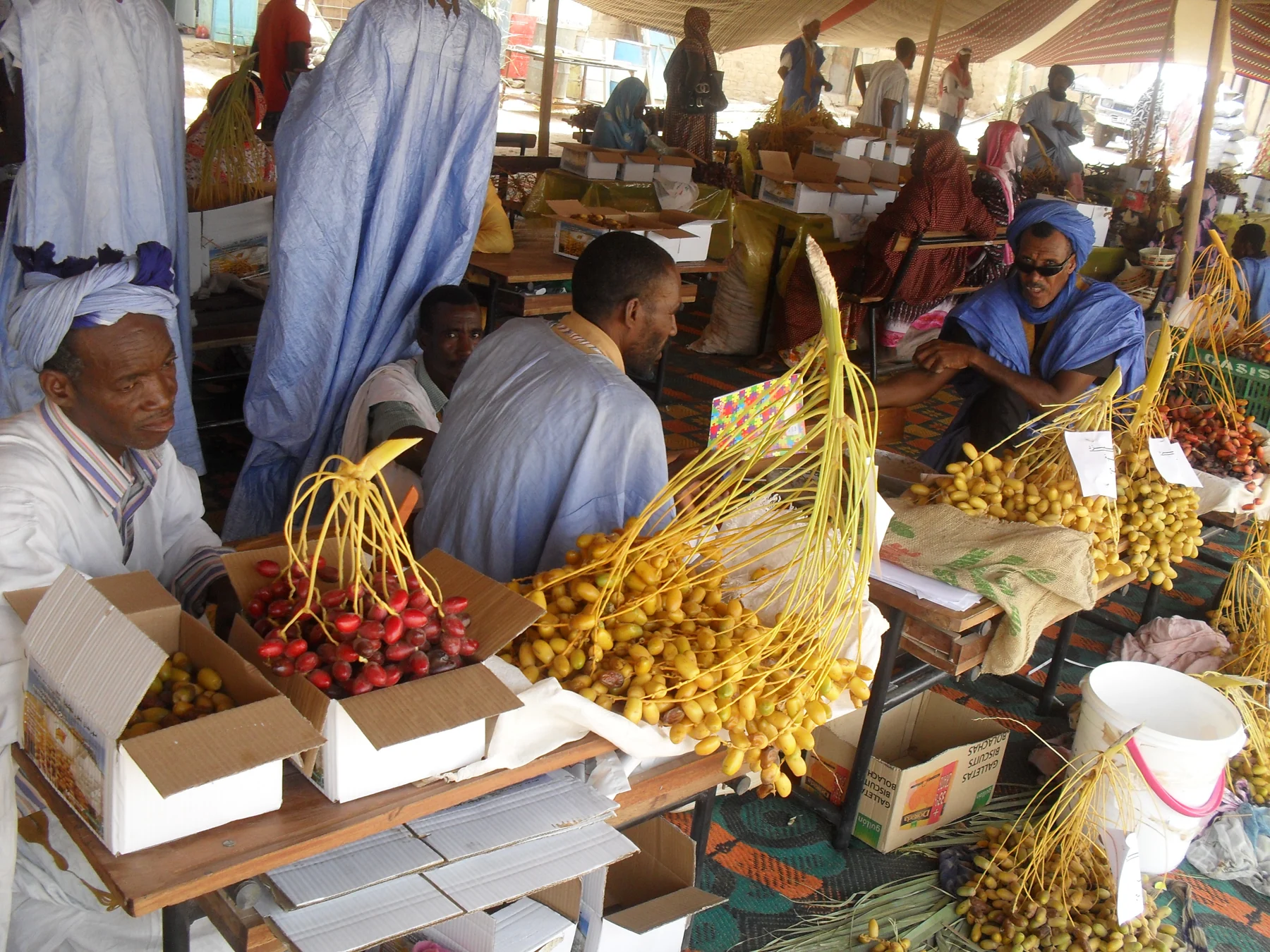
In the photo of the Datolyte market in Tidjika, the fruit still hangs on long yellow stalks. One curl red, the other yellow, surrounded by cardboard boxes, tarp and people. It's easier to get out of this picture than a sand dunes. It shows that the date is season, and someone has to sell it.
In Mauritania, Guetna is a period of persistence associated with family encounters, longer summer stays and trade in oases. People in the city come back to the region at this time. Anyone who wants to understand why a person leaves for the interior of the desert in the summer must put fruit and people waiting for it into the picture at the temperature.
When's the Guetna?
The resources make the harvest for the summer months, but they give different time limits. Mohamed Abderrahmane's 2012producer IPS report contains a harvest from June to August. Cheikh Sidya's 2016 cultural report describes Guetna from mid-July to end August. A 2004 personal photo diary in Adrar puts the summer period of the family known there between July and September.
I wouldn't put together a national calendar for the day. They talk about other regions, other years and part of others: the harvest of fruit, holiday occasions or the stay of a family. The usable answer is that it is a summer harvest period; the maturation and programmes of a specific oasis should be asked in that year.
Adrar is an oasis region in the northern part of Mauritania, and Atar is an important city. The region of Tagant further south, including Tidjikja, is linked to the production of dates. Therefore, Guetna appears in the lives of several municipalities and production sites. That's why it would be misleading to look for the entrance to a single event.
Who comes on vacation and who works
In his report to Le360 Afrique, Cheikh Sidya writes about arrivals from Nouakchott, Nouadhibou and other cities. The meetings can also be linked to a shared meal, music and marriage. The local journalist Idoumou Ould Mohamed, who spoke, emphasizes the maintenance of family relations in the city and oasis.
The change in transport in the report is also an important detail. Some stay in the palm groves, others cut off the quail and take the crop home. That way, the dates get to those who don't spend weeks near the trees. There are different forms of return in the same period.
I'd like to put it next to the term "summer rest" for who. The visiting family and the producer can be in the same league with a very different daily task. One has a few free days, the other has fruit, income and work to do. If we're just gonna have a meal together, we've already cut out half the harvest.
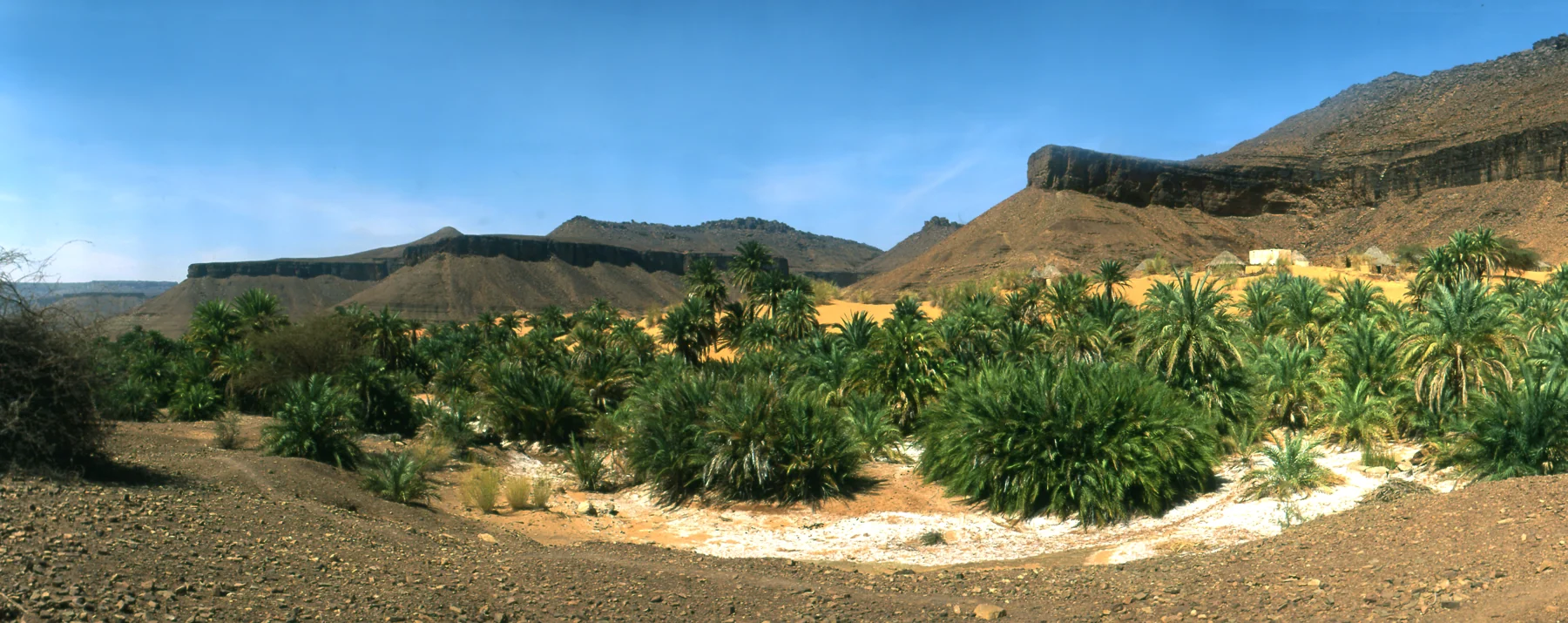

All year round the palm, there is a task
In 2012IPS asked the farmer Tahya Mint Mohamed about the dates. He introduced his own plantation as an investment that he nurtures and spills. In addition to the fruit, he talked about the use of other parts of the palm tree: making baskets, rings and furnishings. This is the report of a specific producer, not the inventory of all Mauritanian households.
The report also describes the fresh consumption of part of the crop and the drying of other parts for later use. From here on out, summer has two kinds of bets: now they're eating from the crop and taking some later. The family meeting is surrounded by harvesting and stockpiling.
What I'm interested in is how the work is divided. Who takes care of the tree when the others aren't there? Who picks, picks and markets the fruit? These should be answered by oasis and family. A photograph of a fine palm litter alone does not decide any of the questions.
The festival will be given a special date
They're also organized dates related to the Guetna. The 5th International Festival of Mauritanian Datoli was opened in Atar on August 14, 2026; the preliminary official programme indicated 14-16 August. This is indeed an event organized in a specific place for certain days.
The report on the opening of the Mauritanian news agency refers to producers, processors and commercial actors. There is also a question of packaging, storage and sales. Such an event has a professional and business task, in addition to cultural programs. The report lists separate producer fees for several types of dates.
It is also worth treating separately when planning a trip. If you want to see a festival, you have to check the date of that event. Anyone who wants to know about the harvest should talk about maturation, producers and the possibility of visiting. The date of the festival doesn't tell us when they're taking them in every garden around here.
Your holiday spot is someone’s plantation
He visited the oases of Adrir with friends from a 2004 Peace Corps photo diary, including a familiar family's palm alliget. The stay there was made concrete by family relations: some knew the place and the owners. The diary is an old personal report, so today's entry conditions cannot be read out of it.
As a tour planner, I would first like to clarify who is receiving us and what he invites us to. Walking in the grove, talking to the producer and family meals are three separate options. I wouldn't assume either one of them would automatically go to the other. If we were to take pictures, I would discuss it separately, especially in the case of people and situations at home.
It is easy to write about the oasis only from the point of view of the traveller who arrives: it is finally a shadow, at last a rest. Guetna's sources show more movement than that. People come back, crops go on, the market has to find a place for the fruit. Our visit falls into this already working period.
The bad harvest during the holiday is also a bad harvest
In his 2024 AFP report, Adrien Marotte talks about the loss of palm trees and the difficulties in living in the surrounding areas of Azougui and M - Heiret. In addition to harvest preparation, they must also address sand, water shortages and the consequences of previous floods. The report shows the state of certain locations at that time, not the situation of all Mauritanian oasis today.
The reason I wouldn't miss this part of the Guetna is because we need a tree to grow together for the summer. At the same time, it does not follow from the losses that every encounter is a mere farewell to a disappearing world. Families spend their own time there, and farmers are counting on the next crop.
In the tidjikja market picture there are different color dates next to each other, behind them open boxes. If I could stand at the table, I'd ask you first which one is worth eating today and which one is later.
Sources and verification
Source verification: The dates of historical sources are shown separately.
- Mohamed Abderrahmane / IPS: Mauritania (s) Date Palms, Cultural Heritage and Means of Survival - August 21, 2012 Production interview, use of palm, summer harvest and drying. The old production and economic figures have not been taken over as today's data.
- Cheikh Sidya / Le360 Afrique: Dans la fièvre de la Guetna - 21 August 2016 Local speakers, return from cities, meals and family relations. The time limit of the author for the year is not a national eternal calendar.
- AMI: Ouverture à Atar de la 5e édition du Festival international des dattes mauritanennes - 14 August 2026 Official coverage of the opening. The objectives of the organisers are not proven to be economic results.
- AMI: Réunion préparatoire du Festival international des dattes - 7 August 2026. The date of the 2026 event, previously designated on 14-16 August, is not the duration of the entire Guetna.
- strolle.com: Peace Corps Mauritania - Adrir 2004 - Personal photo log 2004: visit through family contact and summer stay. It's another author's experience, not Henry's and not today's visiting policy.
- Adrien Marotte / AFP: Climate change theratens age -old Mauritania date harvest - July 19, 2024 An on-the-spot report in the vicinity of Azougui and M - Heiret; we do not generalize the experiences of speakers at that time for all oasis.
Research cultural article with an audit on 23 October 2026. It doesn't have a Mauritanian field memory attached to Henry. The copyright questions and tour organizer considerations are current-time readings. The local timing of the Guetna, the next date of the festivals and the possibility to visit must be discussed separately. The images are dated archive recordings of external authors.