
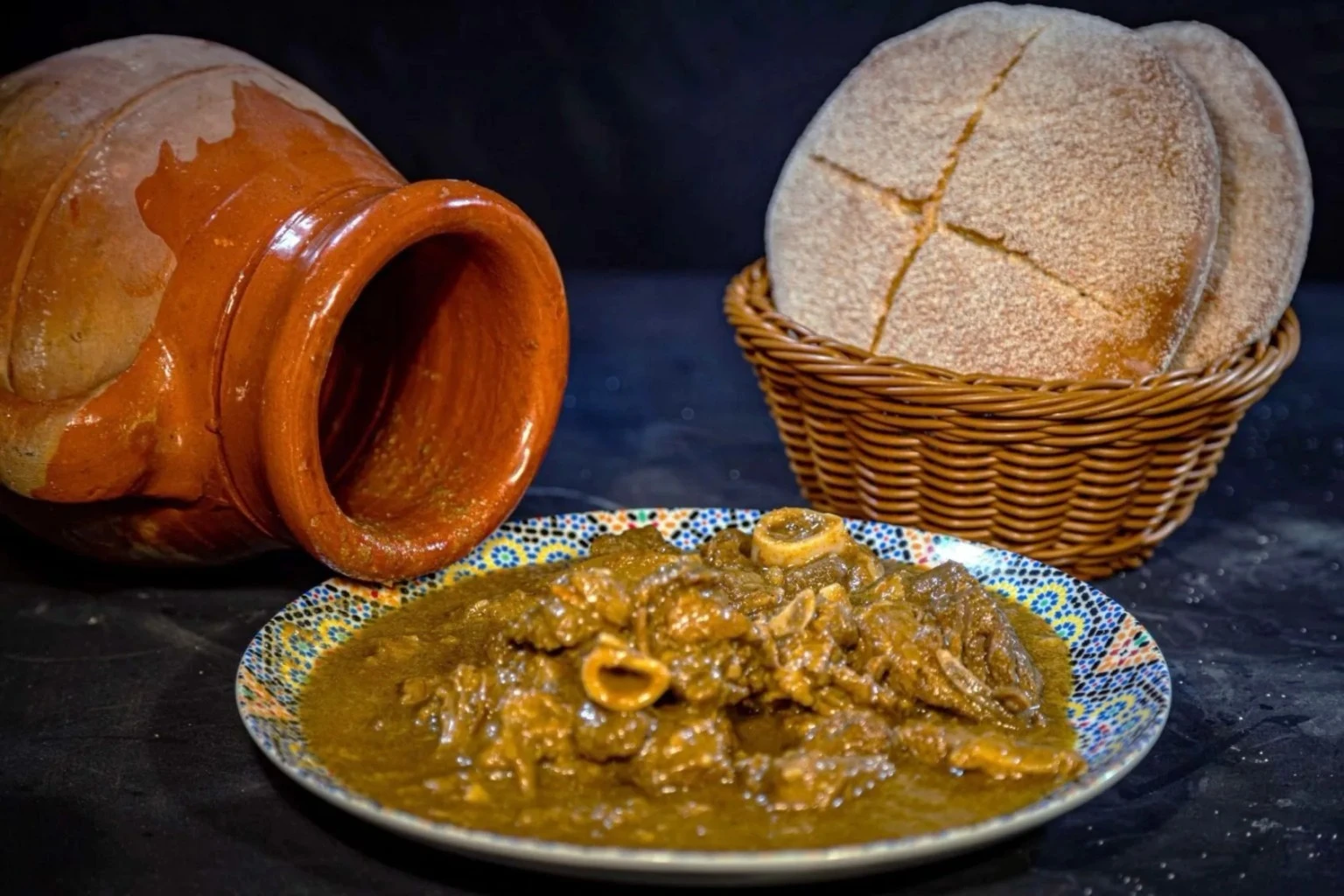
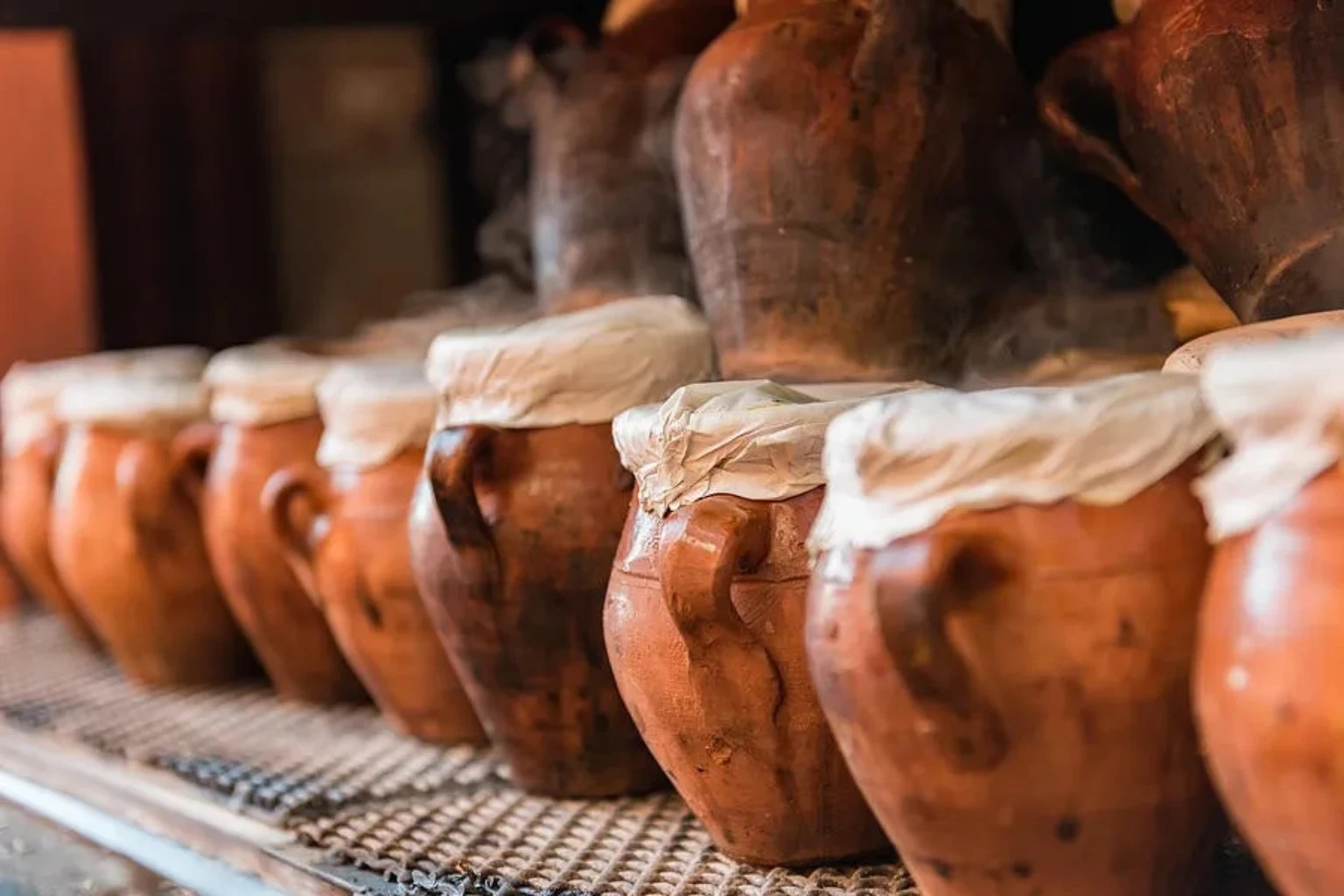
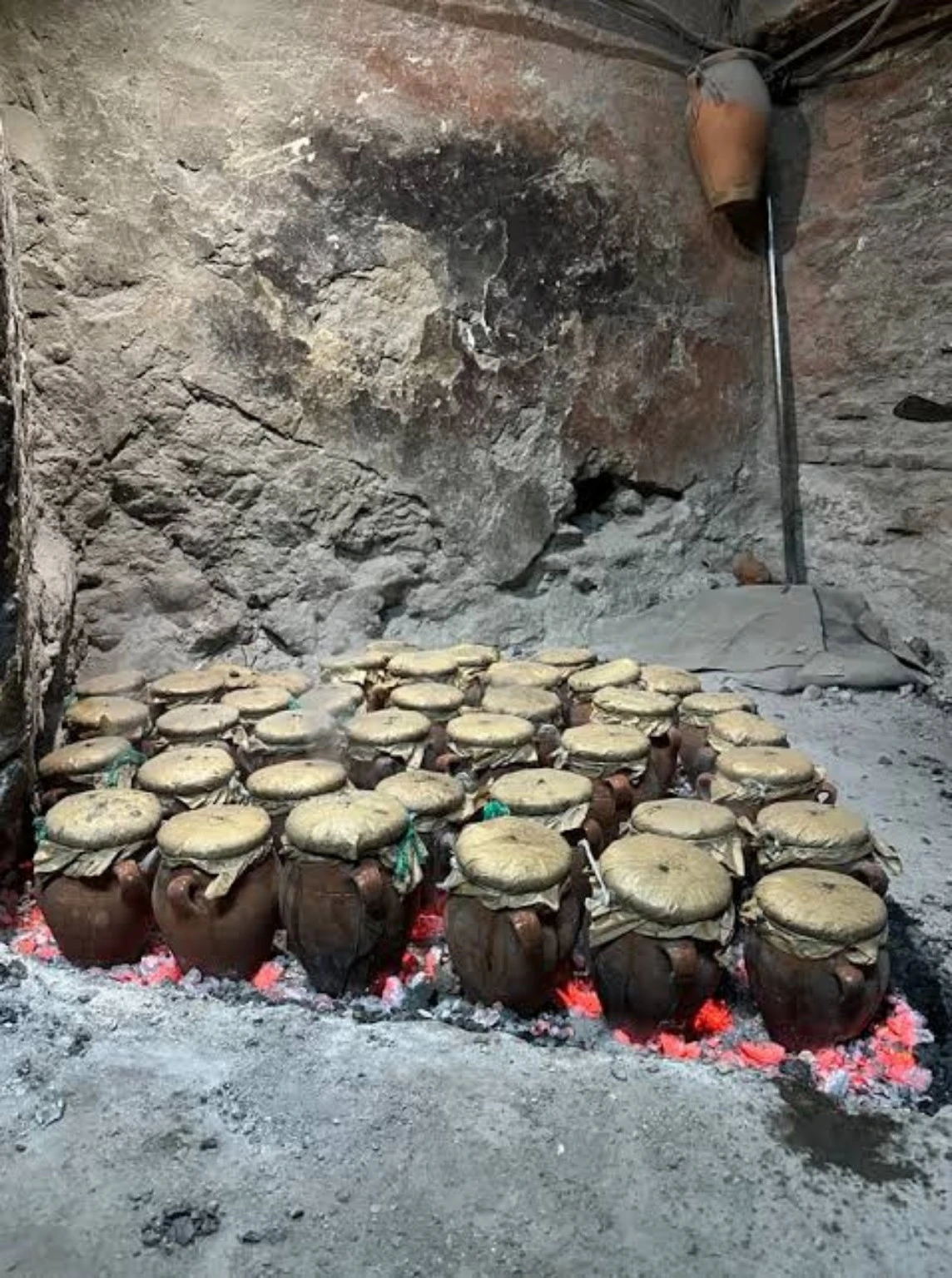
Tangery is worth separating from tagine before you order. The two names are similar, both of which represent a dish and the food in it, but they are different forms and other methods of preparation. Tagine is a flattener container with a tapered lid. Tangery is a high bay clay jar, in which the meat is traditionally slowly prepared in the parasite and ash of the fire used to heat my ashes.
I'm interested in the path of the vessel right now. A lunch that needs to be prepared from home, but we're not going to the restaurant. We leave part of the cooking to someone else, and then we go back for it. Between shopping and eating, there will be a special organizational task.
As a traveler, it's easy to see a ready course. The meat arrives, the bread comes next to it, and all that's left of it is that it was delicious or less. But it's also interesting how it turned into a lunch at the gym. Who put it together, who watched where the pot stood, and when they had to go back for it.
It starts at the butcher's, continues at the furnace.
Rathina Sankari In his 2026 Marrakesh report, food goes through the hands of several people. The meat comes from the butcher into the jar, another business gives the ingredients to taste it, and the sealed vessel is placed in the grass by the manager of my ash furnace. The process is not connected by a single kitchen: various workshops and works in the city district are linked together.
I wouldn't automatically call that a simpler life. Whoever cooked with other people knows that we still have to agree because we shared the work. There must be the raw material, the right vessel, the place at the fire, and the man who knows what he's doing with it.
That's what makes it interesting for me. It's easy to get the job out of the game. Over a bowl of crumpled meat, we rarely think about someone taking care of the fire for hours. In the history of school, this man stays in it.
The ingredients are only thrown into the preparation; therefore, no more than one part of the preparation is described. Just because the guest has little to do doesn't mean someone has to pay attention to what's going on.
What's in the jar?
Common basis is beef or lamb meat, garlic, Roman cumin, saffron and lemon in salt. However, the versions are not entirely the same. The Moroccan gastronomic summary of Nada Kiffa presents various parts of meat, different flavours and variants in other cities. That's why I wouldn't put the tangia in one mandatory recipe and claim that Marrakeshen is not the only one.
In addition to the name on the menu, it is therefore worth asking about the raw material. What kind of meat is it made of? They give you bone fragments? Is the dose for one person, or can we order together? What does it involve?
These are not particularly romantic questions, but they can be more useful than lunch than how many hundred years old the recipe is. Especially when someone in the company means something quite different from what eventually arrives.
The list of spices doesn't tell us everything. The amount of meat, preparation and gravy at least so determines what you get. If you are looking for the exact equivalent of a familiar Hungarian stew, you will probably require more explanation than that of slow-cooked meat.
The hammam has another side
Travelling pictures of my ashes usually show the bathroom. But there's a way to focus on heating. In Amanda Mouttaki's Marrakesh report, the fire manager, in addition to heating the bath water, is also looking at the vessels that she carries. The pitcher spends long hours in the slow heat; preparation and meals do not necessarily fall into the same short program.
That's a difference as a traveler. To look at a furnace, put together a tangia and eat a tangia is three different things. Maybe all three of them in the same program. But that's not worth assuming by the title.
A Dar Zaman for example, its cooking programme also lists the visit of the local market, the common bread oven and the heater of my hamam. At the same time, the cooked dishes include tagines and salads. In other words, a visit to the school does not in itself imply that the participant is preparing and eating his own tangia.
For me, a description like this can be used when I understand it. I don't want to know at lunch that what I was curious about was a short stop on the way.
How long does it take?
I wouldn't give you a single watch number for every place.
In the Roadmap of Go West Travel in 2024, participants compiled the dishes, put their names on it, took them to the furnace and planned to receive them for the next day. This is the course of a documented program. It's not a general rule that you have to wait for every tangia until the next day.
In terms of travel, that's why two separate times are interesting: when do you have to deal with food and when you can eat it. There may be other programs between the two if this is possible by conciliation. But if you leave Marrakesh that afternoon, the takeover cannot be arranged with a shrug.
I would like to ask you in advance if, at the end of this program, we need our own prepared food or a previously prepared dose. Both can be a sensible solution. It's just a different experience, a different schedule, and you learn something else.
Slow preparation doesn't have to turn our entire day into a wait. It should be more accurate to describe the program.
Eating in a restaurant is perfectly fine.
We don't all have to carry a jar full of meat in the medina to try a meal.
If you're interested primarily in taste, a restaurant dose can be the simplest choice. If you want to make it, you might want to find an opportunity to show and explain the process. None of the two are superior travelers.
The program organized for the tourist can still be thoughtful and meaningful because it was organized. I'm more concerned with the description promising my own cooking, and at the scene, we can only lift a sealed vessel for the photograph.
The reverse is also true: a working job does not automatically become available because it is interesting. The man working next to the furnace could be busy even when we have ten minutes to look around. Visiting and photography is why I would like to discuss it in advance.
It's not much of a cultural puzzle. We just arrive at someone else's work.
Treat the “men’s dish” story with care too
Description of the curricula often links the catch to male craftsmen, workers and shared meals. The story is presented in various versions: some are linked to the working day, elsewhere to friendly gatherings. The author of Saveur himself calls the exact origin of the food uncertain.
I wouldn't make a rule out of that today about who can make it or who should order it. The history of origin and the current opportunity to participate are a separate issue.
Stories like the recipe of marital quarrels can be well told, but there will still be no historical evidence. If they turn up, they can stay what they are: the original stories.
The school is interesting enough without them. There's a specific vessel, a cooking process and the work of several people. It doesn't necessarily require an anonymous man who once proved he won't starve to death alone.
What would I ask before I book a program?
First, I'd like to clarify exactly what we're going to do. Do we choose ingredients, build our own dishes, visit the oven, or taste ready food? The cooking experience (* * * * * * * * * * * * * *
And then the timing would be when we start, when we're done, and when do we eat the food? If you have to go back for it, will the takeover be part of the program? If there's a food sensitivity or a different dietary demand, I'd like to discuss it before shopping, not when everything is already in the jar.
At the price, I would ask what it contains: raw materials, dishes, furnace use, escort and meals? Not because each item has to be on a separate account. It's to talk about the same thing.
Good organization at this point is not very spectacular. It's mostly about asking a few questions in time.
Buying the pot is another decision
A thong can easily be liked by someone who originally just left for lunch. Its shape is unusual, and the mouth sealed with paper makes it a very different object than our usual lid vessels.
But taking her home is a separate plan. I would like to clarify first how the concrete piece is sold for cooking or decoration, how to use it and what heat source it is recommended for. I wouldn't trust the questions about the oven to make each pot look about the same on the outside.
It is also worth picturing packaging before buying. We'll put it somewhere, the method works on a T-shirt. It's less convincing than a clay pot.
Maybe finally it's enough to taste the tangia, see how it's made, and go on empty-handed. In the meantime, I'd leave the jar to someone who knows when to take it out of the ashes.
Sources and verification
Source verification: On the day of reservation, recheck the official terms.
- Nada Kiffa - All About Moroccan Tangia or Tanjia, Taste of Maroc - 12 March 2018 Food, preparation and regional versions. The catch is not presented exclusively as food in Marrakesh.
- Amanda Mouttaki - Everything You Need to Know About Moroccan Tangia, Saveur - 28 February 2023 Local report on the furnace and catch; the uncertainty of origin history remains.
- Rathina Sankari - How Tanjia Shaped Marrakesh * s Social Life, Smithsonian - 10 June 2026 Original report on the division of tasks. It's not Henry's personal experience.
- Go West Travel - Tanjia Cooking Class - 19 April 2024 Specific travel reports with the day-to-day receipt; not general preparation time.
- Dar Zaman - cooking program's own description - The distinction between the kiln visited and the food actually cooked. Current price or available place is not promised.
- Riad Alkemia - Tajine and tanjia - The difference between the dishes and the original story. Legend is not historical evidence.
The current and conditional personal considerations are copyright, not their own curriculum production report. The content, timing and price of the programmes shall be agreed separately before booking. The three illustrations were provided by Henrik; they are not included as their own BMW photos, and their exact place of production has not been verified from the attachments.