
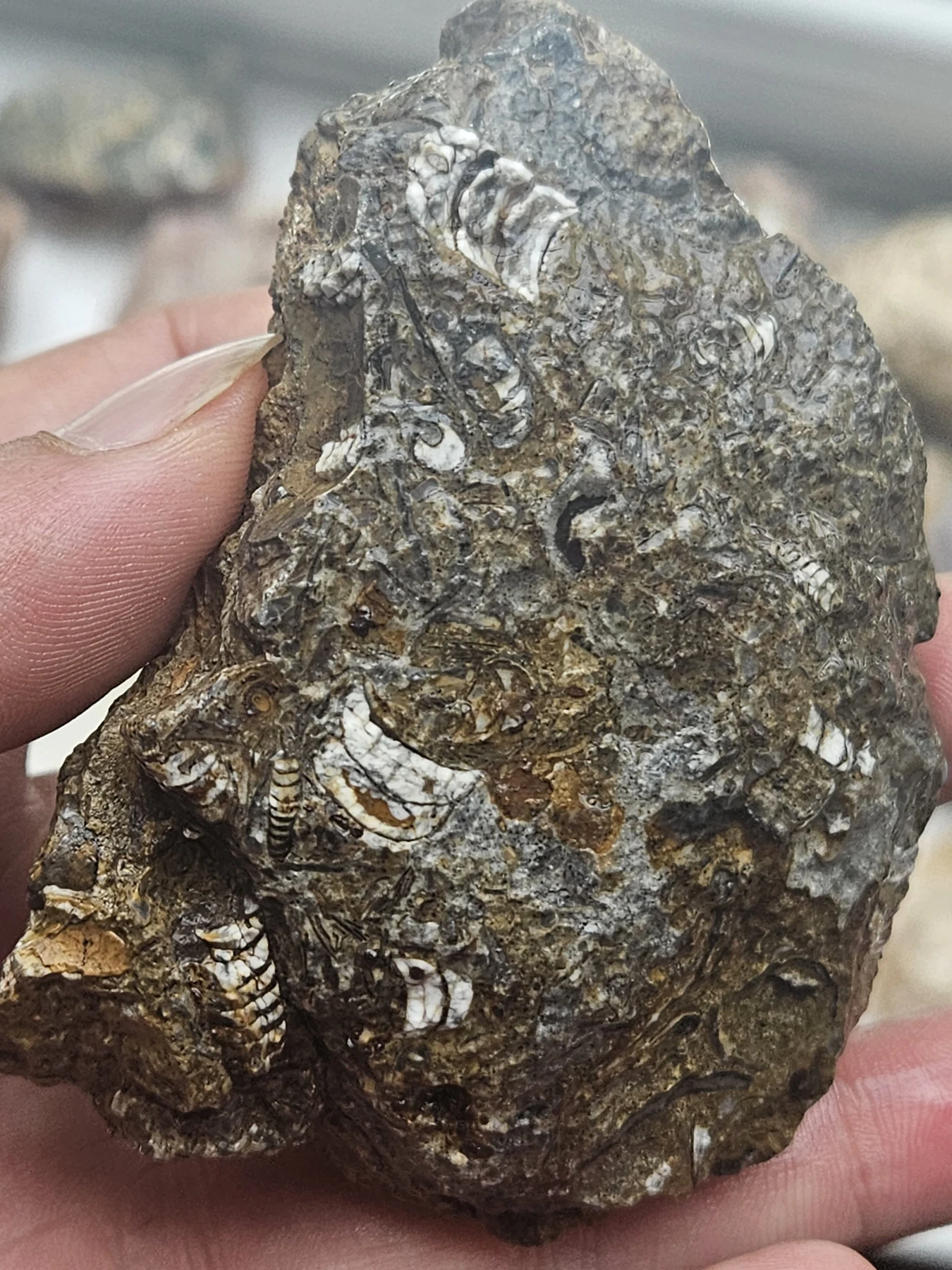
A patch on a fossil doesn't prove it's fake. And the flawless surface doesn't prove it's original. When buying a Morocco fossil, it is first worth clarifying which part of the animal has survived, what has been reinserted and what has been built. This is a lot shorter than the real-world inscription. He's just saying less.
The most important difference is simple: gluing the original pieces together to repair; shaping the missing parts to restore; copying a fossil to make copies. Several items are different again. These aren't worth doing with a single fake-real switch. In purchasing, it also matters how the object is presented: the same supplement can be openly undertaken work or silent intervention.
A finished display piece doesn’t simply emerge from the rock
Juan Carlos Gutiérrez-Marco and Diego C. in their study on fossil fuel trading in Morocco García-Bellido describes the work that leads from breaking rock to taxing. The section of a trilobite can be seen in the open stone. The fragments are assembled together, and the surrounding rock is removed by means. The release of a fine extension may be particularly sensitive; it may also be related to the work of gluing the original part back to work.
So the human intervention around the finished specimen is not a scandal in itself. Prep makes available what the rock was covering up until then. The question is, where did the discovery end and where did this figure begin? A customer doesn't necessarily follow that line with his bare eyes. You don't have to pretend he knows after a few minutes of looking.
They touched it, which is why it's a rather weak excuse for a preparted fossil. They must have touched it. What I'm interested in is how much, how much, and what I would see of the finished subject if I were to use a different color for the additions. This is already a question to which a meaningful answer can be given. The absence of an answer will not be replaced by the solemn rotation of the piece under the lamp.
Four different interventions, four different questions
In repairs, the original but broken parts are assembled together. They also replace the missing form of restoration. The FossilEra trader's own authenticity prospectus also handles these two separately, as well as copies of several pieces and copies. This is a useful conceptual order, although trader information, not independent certification.
In the copy, I'd ask what it's made of and what it's made of. For the assembled piece, whether the parts of a single individual belong together and if the rock around it is in original contact with them. For the reconstructed specimen, the parts that have been replaced. In juvie, where it broke and how much of the original was left. Four different conversations, even if they're all under the same little card.
An object that is openly sold as a copy can be a beautiful memory. An admittedly supplemented fossil can also be a desirable collection piece. However, if you want only the original details that remain, the same specimen is not appropriate. For the purpose of assessing the subject, it is therefore necessary to clarify its own intention: are we looking for ornaments, educational copies or documented collection material? There may be overlap, but it's not worth taking as an automatic.
The fracture doesn't make the fossil disappear.
Paul Freitag presented a Moroccan trilobite, which was added in several pieces in a detailed preparation report. The pictures and descriptions of the work process show how he discovered, assembled and supplemented the damaged parts. The replacement material used has also been identified. The road to the finished state here is not a secret, it's a fundamental part of the report.
Such documentation helps more than how good it looks from somewhere far away. It makes the decisions visible: what was present at the beginning of the work, what was brought to light by the preparation and what had to be formed afterwards. That doesn't mean anyone can decide whether or not to accept the procedure. Information does not require purchase.
What's important to me is that you don't have to tell the subject to be flawed. A fracture could be part of his prior life, and refitting would be a fair solution. A straight sentence about missing parts does not necessarily ruin the experience. Instead, it allows the seller and buyer to talk about the same subject.
An exceptionally beautiful piece proves nothing by itself
FossilEra is another, in the specific case, the trader reported an examination of a spiny trilobite. The fine elongates were first thought to be original, later the preparator investigation revealed that they had been reconstructed. The original details of another similar specimen were also presented in the same report. The lesson to me is, first and foremost, that the recognition of a well-managed supplement may require expertise.
That's why I wouldn't put together a phone flash test where you end up giving a certificate based on three scratches and two spots. The Trilobiti Preparator's Guide also deals with a combined analysis of several signals; the price is not a certain authenticity indicator in itself. Strange detail is a good reason to ask. Confidence is a different category.
With a cheap piece, you should understand what you're offering as well as with an expensive one. The high price does not replace the description. There is no obvious legal form that gives us the right to call forgery from the counter. When it comes to a serious amount or a particularly important specimen, the opinion of an independent expert is worth more than our own rapid confidence.
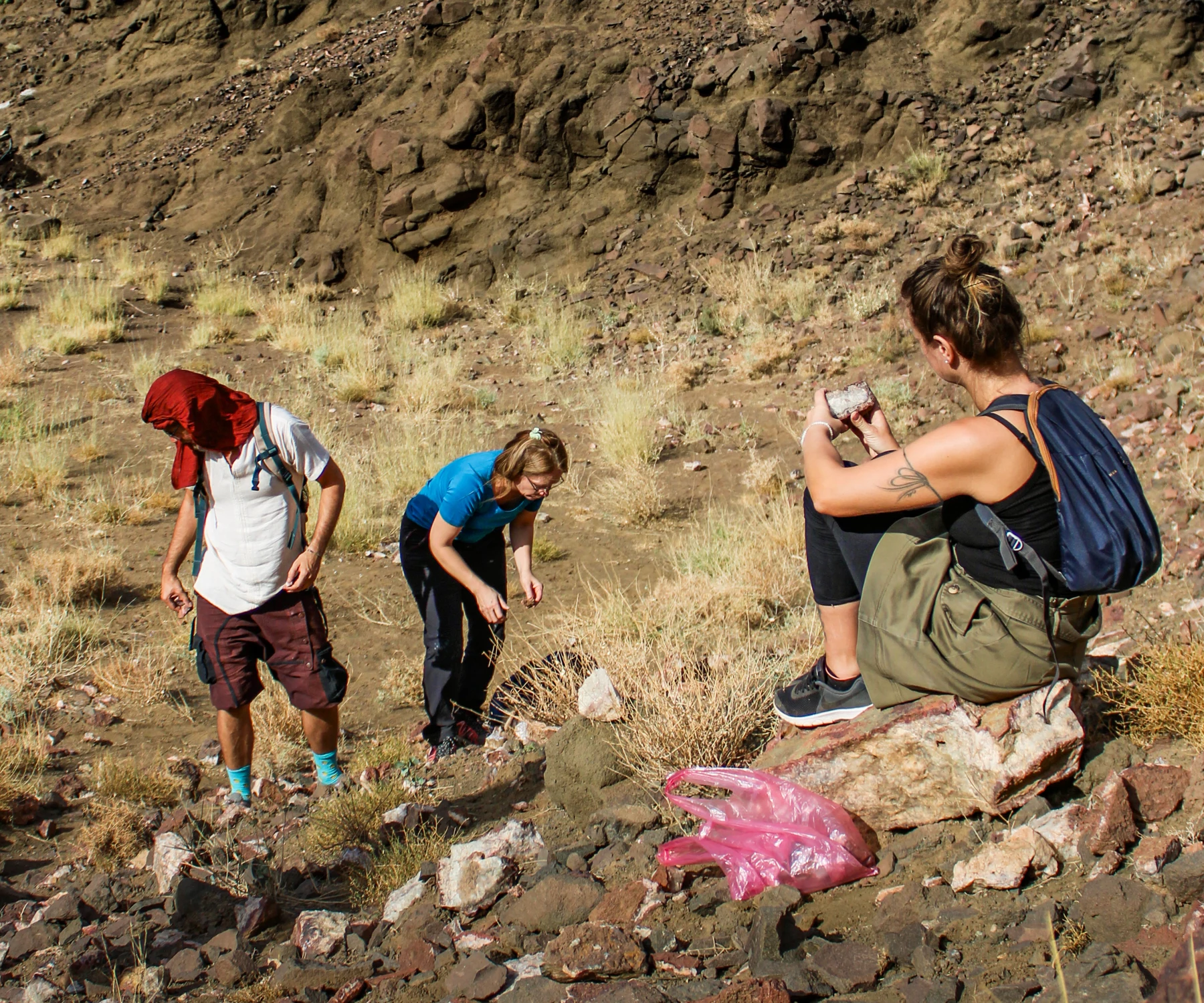
The name of the site is part of what you buy.
I would like to ask for information before purchase: location, identification, known interventions and, if available, images before or during preparation. Not all sellers will have complete documentation. However, the deficit should be treated as a deficit rather than completed in its own history.
There's a difference between accurate data and a loud name. The name of a country is wider than an identifiable location. If the definition of species or age is uncertain, it should remain uncertain in its own record. One question mark doesn't ruin the collection. The retrospectively rewritten label can capture more misunderstandings.
I'd do the same for pictures. A close photo may be a useful reminder, but it does not replace the subject's examination and does not prove all the statements of the description. The article's own archive photos are neither authenticity certificates. Details of the hand-held fossil rock can be observed; its exact age, species or preparting history are not established from this.
Five questions at the counter.
The first thing I'd like to ask is, which parts are original and whether they have a shape-up on them? Is that more accurate than being real? The second question would be whether it was made up of a single specimen and on the rock belonging to it. Number three, what do you know for sure about the location and identification? There is no need to play a loud professional role. Short, ordinary questions.
As a fourth, I would like to ask for the available work photos or other documentation. As a fifth, whether or not the relevant claims could be made to describe the subject in writing. This doesn't have to be a fancy diploma. For me, a specific sentence that can be retrieved later would say more than a stamp that only says "original."
You can also see from the answers to questions how far the seller's knowledge spreads. To be honest, I don't know how much more useful data is than a detailed but uncontrollable story. It doesn't prove the play is good or bad. It helps us determine how much uncertainty we take with it. This decision is not worth letting through to the fact that the bus is already on its way.
When would I rather leave it there?
If there's just a repeat of flawless originality while I don't get an answer about specific interventions, I don't have enough information to buy. The same is true if, despite the missing documentation, I would have to accept the object as a documented specimen. This is a purchase decision, not an on-the-spot opinion about the seller or the whole of Morocco.
The study also shows expertise around the Moroccan fossils and careful preparation work. It would be a shame to make this disappear with an article that sees a scam behind every glue trail. Nor would it be fair if, due to the recognition of artisanal work, the importance of the additions were withheld. I could be interested in both at once.
I might end up choosing a less spectacular piece that I know more about. Or a well-made copy, which is also sold to him. I can fit both of them on the shelf. I just wouldn't change their label.
Sources and verification
Source verification: The nature and limitations of the resources are indicated below.
- Gutiérrez-Marco and García-Bellido - The international fossil trade from the Paleozoic of the Anti-Atlas, Morocco — Study published online in 2018, DOI: 10.1144/SP485.1. Preparation methods, restoration and trade. Its historical market estimates and legal observations are not treated as current data.
- FossilEra - Authenticity Guarantee - Commercial information on the distinction between repair, restoration, assembly and copy. Source of own business interest, non-independent certification.
- Paul Freitag - Moroccan trilobite preparation report, Steinkern - 24 January 2020. A documented specific work process, matching and supplementation; non-representative market survey.
- FossilEra - A Tale of Two Comura: Reconstructed Trilobite Spines - A commercial case study on the detection of reconstructed infestations. Individual case, not all similar copies.
- Trilobiti - A quick guide to identify fake trilobites - 29 October 2019; updated 20 December 2019 Preparator and merchant perspective to evaluate visual signals.
- Rezső of geologist's hedgehog - Moroccoi trilobita - March 6, 2023 The Hungarian language counterexample: there is a domestic awareness of false fossils; our article focuses on the difference between interventions and customer issues.
The current time of personal reflection is new copyright, undocumented purchase memories. Your own archive images are illustrations; the originality, race or age of any object is not rated according to the photos. This article does not negotiate the current legal conditions for collection and export.