
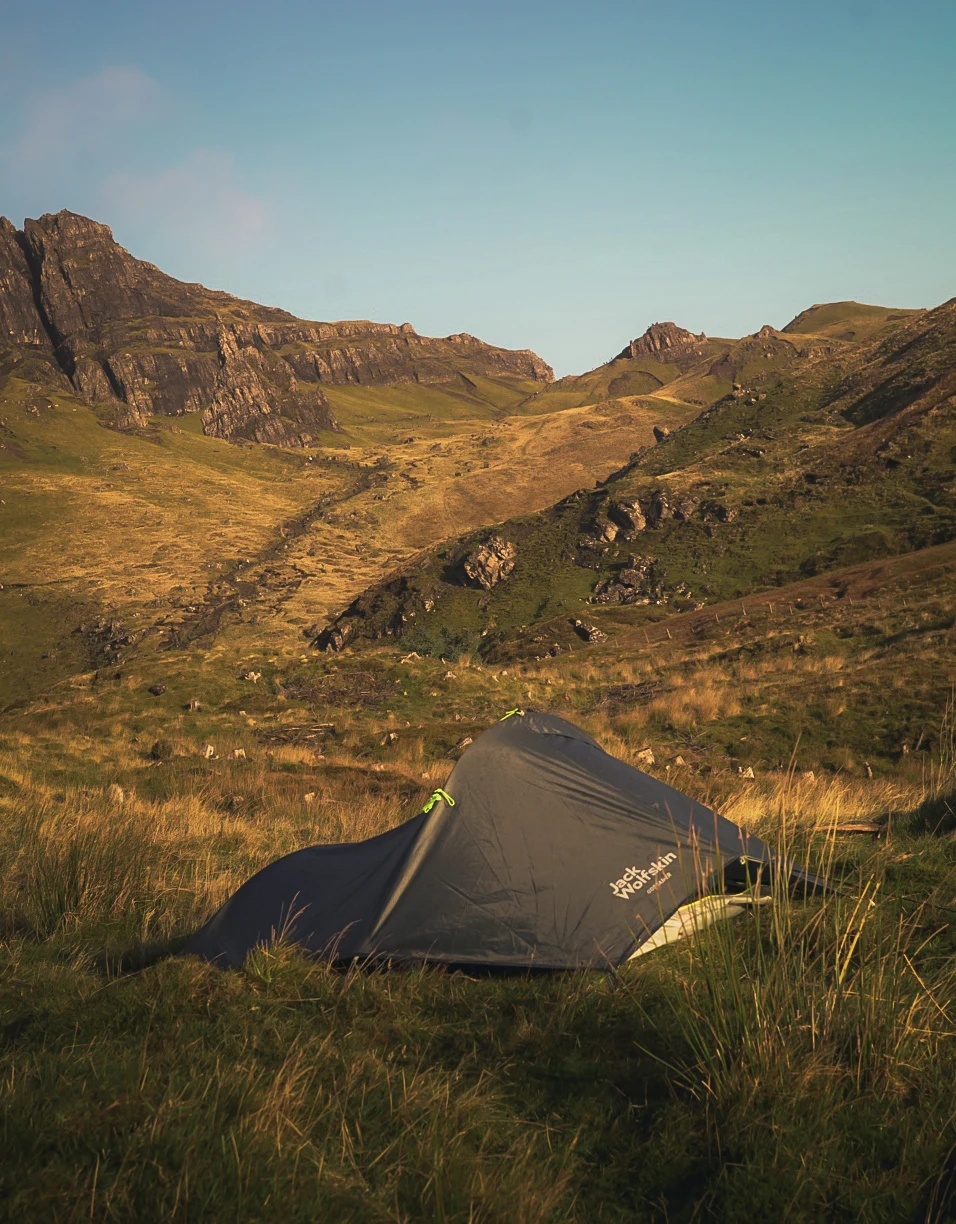
The tent fits in the backpack. The car is less. In the design of a campsite in Scotland, this rather simple difference can mess up the evening: you will find a suitable tent place, but it is still not resolved where the car can stay overnight.
The useful starting point is to check the location of the tent and the conditions for the vehicle separately. The Scottish system of responsible outdoor access does not give you the general right to park or sleep in a motor vehicle. If leaving the car behind you go camping on foot, you need night parking. If you want to sleep in the car, find a place that allows it. The operator of a parking lot can make a difference between the two.
First decide what you want to do
The term "wild campground" can cover at least three different plans by car. You park your car, then you take your backpack to a further tent. You set up a tent right next to the car. Or you won't set up a tent at all, but you'd spend the night in the vehicle. You can't do that with a single Internet yes answer.
The difference is because you have to ask the operator another question. Can you go camping here? Your answer doesn't necessarily tell you if you can leave the car for two nights while camping elsewhere. Can you park here for the night? And it doesn't mean you can set up a tent next to the car.
The most beautiful administrative detail for me is that the evening that looks quite free for the landscape ends with how you use the vehicle. The mountain remains the same. The question is, where do you sleep and what does the car do?
What does the responsible camping framework allow?
The Scottish Outdoor Access Code's official camping information describes easy equipment, small number of tents with two or three nights in one place. This applies to areas where access rights can be applied and assumes responsible behaviour. The choice of location also counts for the rest of buildings, used agricultural areas and others.
The guide to the prospectus is not a national booking confirmation for all grass spots. Local rules and the specificities of the area should also be taken into account. Just because there is no fence in the picture doesn't mean we know what use the earth is or whether it's subject to a separate restriction.
So I'd like to look at the real place and the environment first. Where are the houses? Do they use the area? Would the tent be on its way? What happens to what you took with you when you move on? General eligibility is filled with specific behaviour. The little tent won't be invisible just because it's supposed to be discreet.
The proximity of the car alone does not decide the question of the tent
The National Access Forum's camping management guide explicitly indicates that the names of wild campsites, informal camping and car camping are not always used consistently. This is not a mere debate: it is easy to draw different legal conclusions from different names.
On the basis of this document, certain camping near the road may also be included in the framework of access rights if the area and behaviour are appropriate and other rules do not preclude it. Therefore, it would be excessive to say that a tent near the car is prohibited in all cases. It would be just as exaggerating to read that a tent is allowed in any parking lot along the side of the road.
The position of the vehicle shall remain separate. A legally selected tent is not allowed to park on the ground next to it. And the parking conditions don't change because your tent is already in another area. On the map this can be a few meters; the conditions are two separate places.
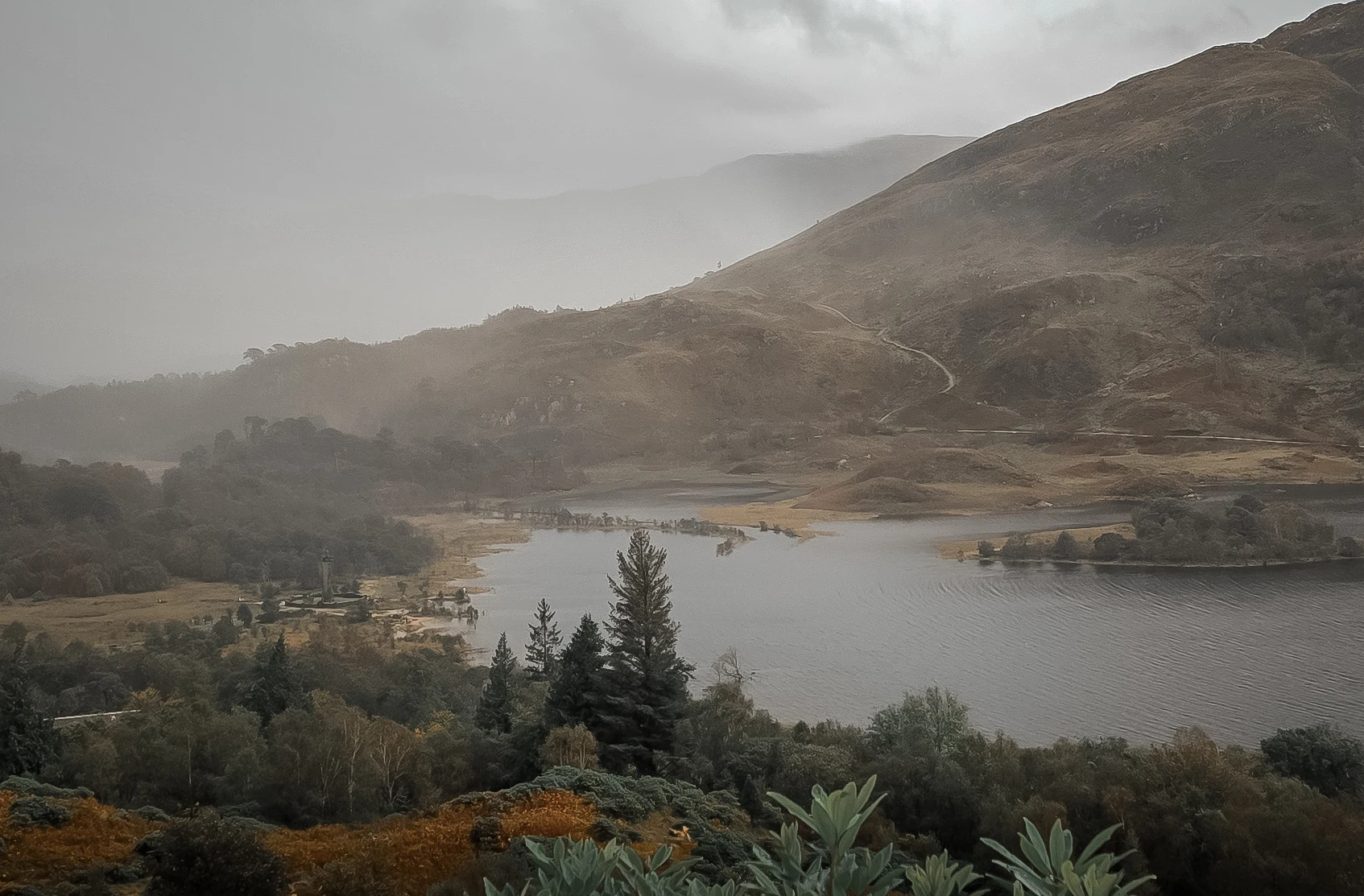
There are places the car can stay, but you can't sleep in it.
The Forestry and Land Scotland parking instructions specifically name parking places where the night-time parking allowed for mountain tours. The checklist includes Glen Doll, River Affric and Glentrool. In addition to the list, however, camping and sleeping in these parking spaces are expressly prohibited and the parking is requested for each day concerned.
This is a good example of why the activity should be named precisely. The empty car may remain while the owner hikes; it has not yet become an authorized night's bed. The list refers to the designated places of that forest manager, not to all parking spaces in Scotland. Before departure, the full current list and the selected parking lot's own data shall be checked.
If I were planning a several-day walk, I'd make that clear before the route is finalized. Is there a night parking? Can it be used for several consecutive days? How do I pay in advance? To these questions, a nice lake photo is not responsible, however persuasive the silence looks on it.
The RV option is not automatically a car option
The same forest manager maintains a separate Stay the Night program in designated locations. This is a system for self-catering trailers and camping vehicles with their own bathroom. A tent or separate toilet set up for the vehicle does not make the equipment suitable.
The conditions checked are one-night stay, a window between 18 and 10 hours and a return limit within 48 hours. Places can be used in order of arrival and cannot be booked in advance. The location list and seasonal availability may vary. These are the rules of this program, not the common conditions for every night place in Scotland.
If you are travelling in an ordinary car, do not interpret this as meaning everything is fine as long as you arrive after six in the evening. First establish whether your vehicle and planned use are permitted at that location at all. Another operator may offer different options; that location’s rules will determine them.
Around Loch Lomond, season and zone both matter
In certain camping treatment zones in Loch Lomond and Trossachs National Park, special rules exist from March to September: camping or permission for camping is required. According to the official information, these zones affect less than four percent of the national park area.
The small ratio does not indicate that the coastline you are looking at is definitely outside of them. We need to look at the zoning map. From October to February, these seasonal camping requirements are not valid, but this does not remove parking conditions and other restrictions.
You can also keep the name territorial difference. The Loch Lomond code cannot be moved to Skye Island, then confirmed by the tent photo taken there. The authorised tent space, the available parking lot and the walking distance between the two can be combined with a suitable plan. If any of them are missing, it doesn't mean you're ready for the night.
What does "No Overnight Stays" mean?
In a conversation at Walkhighlands, a hiker is looking for an answer to leave his car next to the sign he saw in the parking lot while he's camping in a remote location. Subsequent comments from the thread bring new designers and different interpretations. This shows the durability of the question, but does not replace the operator's response.
If the board wasn't clear, I wouldn't be choosing the most favourable comment. The exact question is whether or not the vehicle can remain empty on the given dates while the driver stays elsewhere. The answer shall only give an indication of the place and use. The adjacent parking lot shall no longer be carried automatically.
The location indicated in the map application or the report of a former traveller is a useful point of discovery. It shows that someone was taking care of the place. However, the current conditions are not justified by the fact that someone slept there last year and did not speak to him. The fact that something has been tolerated does not give us permission or access.
This is how the usable evening plan comes together.
First, separate the walking tents, spend the night next to the car and sleep in the vehicle. Then identify the area of the tent and the parking lot operator. Check the local zone, date, parking time and payment. Clear the precarious point with a specific question while you still have the opportunity to choose another place.
Also leave a reserve if the parking lot is full, or if it is not suitable for the site. Licensing and free space are not the same. A forward-looking campsite is a complete plan, especially if the alternative is to start reading new parking conditions in the dark.
The information saved on the phone can really be used if the name of the place, the date and the operator's response is written together. The fact that you can go camping in Scotland is not enough to get your backpack started. And the car, especially.
Sources and verification
Control of rules and fees: On the day of reservation, recheck the official terms.
- Scottish Outdoor Access Code - Camping - The framework for the easy-to-install camping and special handling of motor vehicles.
- National Access Forum - Management Camping with Tents in Scotland - 2021 professional guide, especially road-side camping and delimitation of vehicle use. It's not an actual parking list.
- Forestry and Land Scotland - Car parking - Night parking places suitable for selected mountain hiking; no sleeping and camping in a vehicle, expressed in the list.
- Forestry and Land Scotland - Stay the Night - Self-catering camping vehicles, time window, one night and return limit; seasonal space list.
- Loch Lomond & The Trossaches - Camping byelaws - March-September local camping zones, maps and permits.
- Walkhighlands - Overnight parking / wild camping conversation - 2025-2026 design issues; comments are non-operator licenses.
The article summarises official notices for practical planning and does not grant individual permission to a single selected location. Parking conditions, space, zones and seasonal lists may be changed. The own Scottish photos show the landscape and camping; they do not demonstrate the current conditions of use of a parking lot. Henrik's drive or his sleep in a vehicle is not being controlled.