
You take pictures in the cold, and then you sit in a hot coffee shop. Or you can start from the air-conditioned accommodation on the humid street. You could pull out the machine, but the glass already has the veil. You delete it, it comes back. In the light, he goes on to his business.
The basic rule is short: put the cool, dry camera in a well-sealed plastic sachet before entering a warmer, more humid air. Leave it in the new place to adapt, and then open it. Once the moisture has been released, turn it off and wait for its full evaporation. Your own machine manual is the priority: each model's management specifications may differ.
That's the order I'm interested in. The same bag has a different function on both sides of the door: prevention before it, and then at most a broken timing device. Photographic equipment can be sorted out for a long time, but here you have to decide when to put it away first.
Check the camera’s temperature, not the season
You don't need snow for the condensation. The decisive relationship is between the cold surface and the moisture of the air around it. The dew point indicates the temperature at which the air becomes saturated when cooled; water precipitation may appear on a colder object. The glasses and the bottle from the fridge are a familiar example.
This is why a machine imported from the winter street and an objective cooling through the summer accommodation may be placed in the same position. The traveller has a very different feeling: one door finally gets into the heat, the other gets out from under the climate. In both cases, a cold surface may meet warmer wet air from the point of view of equipment.
The dew point in the weather app helps to understand the situation, but it does not measure the inside of the lens for you. No external temperature indicates a steady waiting period. I wouldn't give a rule that every machine needs exactly 20 minutes.
Put the camera away while still outside
The Nikon Z9 manual proposes a sealed sachet or plastic case before the sudden change of temperature and allows you to remove the machine after adaptation. The Canon PowerShot PICK / PX guide describes the same preliminary closure. For this trip there is a simple work schedule: the removal should be part of the completion of the photography, not start at the coffee shop table.
Prepare a bag in which the equipment can really fit and can be properly sealed. If you use it with the lens, try it at home together. On the spot, it is not good to learn new packaging techniques with a bag wrapped around the half-hanging awning.
The important thing is that warm, humid air does not reach the cold equipment immediately. That's why it matters where you close the bag. The closure of the already wet machine is not the same operation and the advice to prevent it is not automatically used as a drying method.
Allow time when leaving air-conditioned accommodation too
Sunrise photography tends to only count walking. All these minutes from the door to the beach, a few more minutes on the stand. If the equipment has to adapt, this itinerary can forget as much as morning coffee.
I'd leave the time for the transition in planning. Pack the dry machine in the cool place and wait for opening in the warmer environment. In the meantime, you can walk to your chosen place, see the background, or decide if it's worth taking pictures from there. The wait doesn't have to be in front of the view with a towel in hand.
A short coffee break is worth thinking about in advance. Do you need the camera in there, or is it just with you? If you're not planning an indoor photo, why open it right there? This is an organization decision: handling equipment should be adapted to what you really want to take photos of.
If condensation has formed, give it time
Canon instructions are clear: in the event of condensation, the machine must be turned off and not used until moisture has been completely eviscerated. It also protects against removing the card until the machine inside is cold and has not adapted to the new environment. This is important to separate from the situation where you prepare the card in dry conditions before switching.
I wouldn't even start a quick field experiment by removing the lens. Deleting the outer glass alone does not prove that everything inside is dry. Nikon specifically mentions the possibility of condensation outside and inside the machine. If moisture does not pass, a bug mark will appear, or the intake, manufacturer's support or service will be the next step.
The difference between the two is: do you want to prevent a known situation, or are you trying to make a mistake? The first one needs a routine. The second one doesn't always need an Internet tip.
A sealed bag is not permanent storage
Once the transition has been completed, storage is a different task. Nikon proposes a dry, well-ventilated space to prevent moulding; it indicates that the absorbent material mentioned in long storage will lose its capacity over time. The state of a bag that had been thrown into the bag cannot be regarded as eternal life without looking at it.
I would like to treat this as two separate unloading points: first adapt the machine and then get it into suitable storage conditions. At the end of the day, don't forget it because on the way back there, there was no mist on the glass. Arrival to the accommodation, backup and equipment arrangements can be part of the same night, but you don't have to solve everything at the same time at the door.
Before we go, I'd like to put the bag where it falls at first temperature change. The bottom of the backpack is excellent for closing. You just have to dig it out first.
Sources and verification
Source verification: Also read the current management manual for your own computer.
- Nikon Z9 - Caring for the Camera and Battery - Pre-temperature closure, adaptation, internal and external condensation, storage and absorbent materials.
- Canon PowerShot PICK / PX - Handling Precautions - Special treatment of prevention and already established condensation; deactivation, complete evaporation, card handling warning. Model instructions, not all service instructions for machines.
- National Weather Service - Dew Point Statistics - Physical explanation of the dew point and condensation.
- National Weather Service - Glossary - Determination of dew and dew point; interpretation of moisture condensing on cold surfaces.
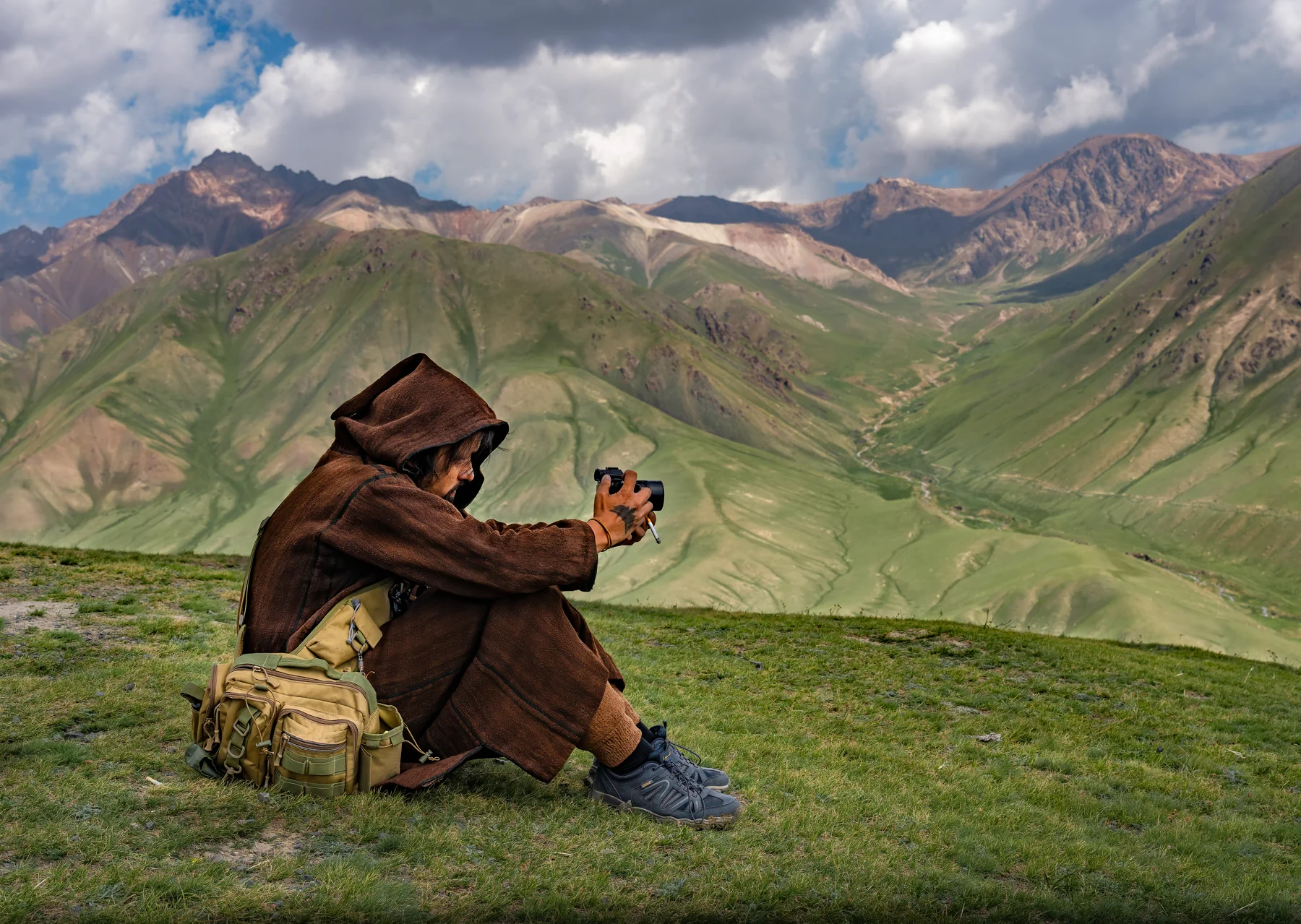
Control: 20 October 2026 The technical claims were linked to primary sources of production and meteorological origin. There is no waiting period or non-fault guarantee for all circumstances. It's always in your own model manual. Design examples are conditional situations, personal reflections are new copyright; undocumented field memories are not set. Image from the BMW archive is illustration: it does not document condensation or failure.